Integrating Traditional, Complementary and Integrative Healthcare Research into the Next EU Long-Term Budget EUROCAM Policy Paper - EU Multiannual Financial Framework 2028-2034
Why TCIH Matters for the 2028–2034 EU Multiannual Financial Framework
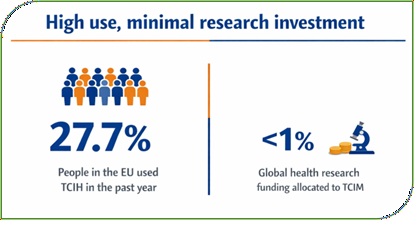
As the EU moves toward finalising the Multiannual Financial Framework (MFF) for 2028–2034, it faces a moment of strategic choice shaped by geopolitical instability, rising health needs and accelerating societal change. Europe’s health systems are under increasing pressure from chronic disease, mental health challenges, ageing populations and constrained public finances. At the same time, citizens are turning to Traditional, Complementary and Integrative Healthcare (TCIH) in large numbers, with over 27.7% of Europeans using TCIH in the past year. Yet EU investment in this field remains almost non‑existent.
EUROCAM’s new policy paper outlines why the next MFF must recognise and invest in TCIH as part of Europe’s strategy for resilient, sustainable and people‑centred health systems.
Key insights
- High use, low investment: Despite widespread uptake, less than 1% of global health research funding supports TCIM.
- Strong alignment with EU priorities: TCIH contributes to prevention, healthy ageing, mental wellbeing, integrative oncology, NCD prevention and One Health — all central to EU health and sustainability agendas.
- Growing global recognition: The WHO Global Traditional Medicine Strategy 2025–2034 calls for stronger evidence, regulation and integration of TCIH worldwide.
- Innovation potential: TCIH offers cost‑effective, low‑carbon, person‑centred approaches that complement digital health, AI and the European Health Data Space.
- Economic and societal value: By supporting wellbeing, prevention and patient engagement, TCIH can contribute to a healthier workforce and a more competitive, wellbeing‑oriented European economy.
EUROCAM’s call to action
EUROCAM urges EU institutions to allocate dedicated funding for evidence‑informed TCIH research within the 2028–2034 MFF. Strengthening research capacity will help build a robust evidence base, support safe integration into healthcare systems, and respond to citizens’ demand for holistic, preventive and person‑centred care.